Goal and audience alignment
Translate broad ambitions into defined audiences, customer problems, and outcomes that can be discussed.
Face45 / Growth & marketing
Digital strategy
Turn business goals, audience needs, and current evidence into a focused plan for channels, experience, measurement, and next actions.
From business priority to learning
Digital strategy / choose what matters
A practical look at the people, information, and systems involved in digital strategy.

The service, in context
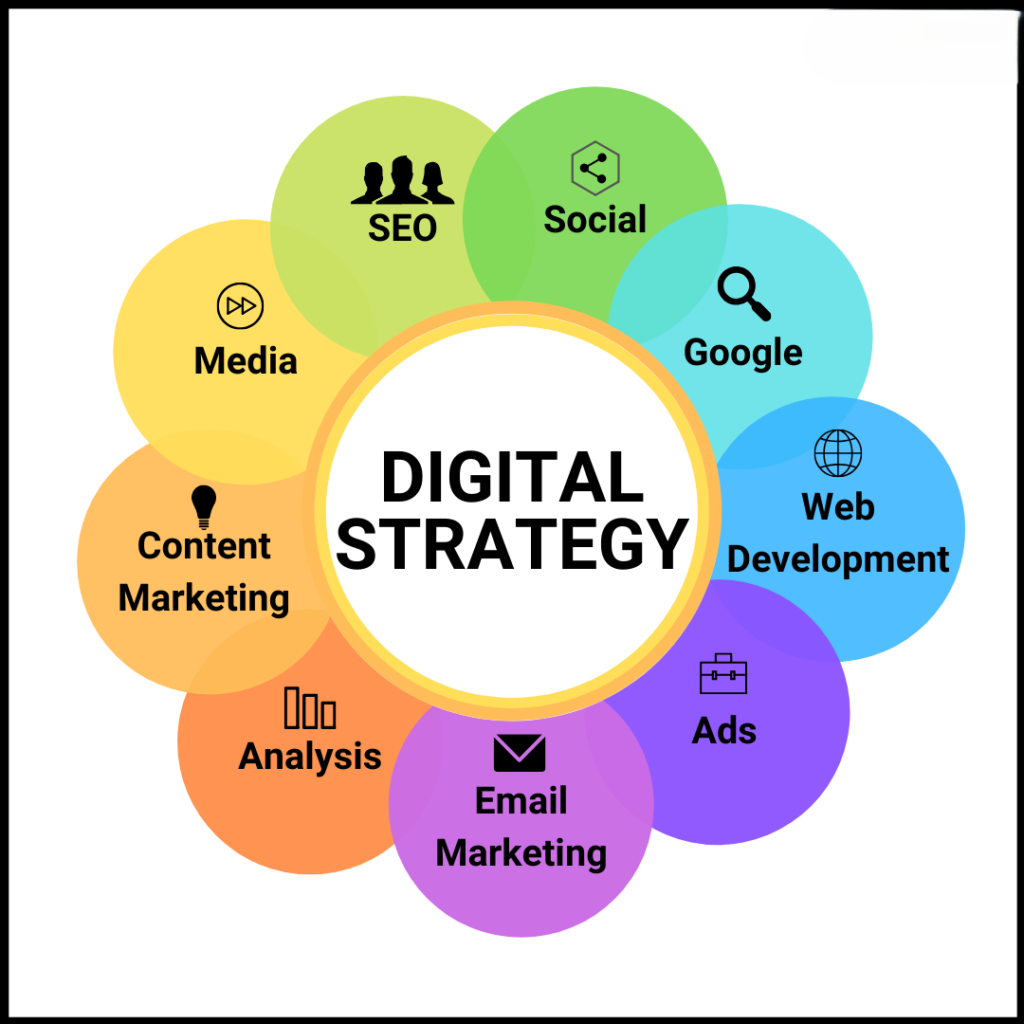
A practical digital strategy describes who the business needs to reach, what those people need to understand or do, which channels and assets support that journey, and what will be deprioritized. It connects digital work to business context without pretending that a plan can remove uncertainty.
Turn business goals, audience needs, and current evidence into a focused plan for channels, experience, measurement, and next actions.
Typical areas of work
The final scope depends on your systems, audience, priorities, and the evidence available. We agree deliverables before work begins.
Translate broad ambitions into defined audiences, customer problems, and outcomes that can be discussed.
Assess current website, search, paid media, content, and customer journeys against the priorities.
Sequence work into a realistic set of initiatives, dependencies, owners, and review points.
Select a small set of leading and outcome measures, with notes about data gaps and attribution limits.
Growth & marketing / Interactive service map
The plan should name assumptions and decision points so it can change when evidence changes.
Interactive workflow / service map
Select a step to see what happens, or use the controls to move through the sequence.
Select a stage to inspect its details
Stage 01 / What happens
Review goals, customers, current activity, internal capabilities, constraints, and available evidence.
Choose a scope area
Select an area for its detail and a practical planning note.
Scope area 01
Translate broad ambitions into defined audiences, customer problems, and outcomes that can be discussed.
How we approach it
Each stage has a defined purpose. We confirm what is learned, what is changing, and what needs your approval before moving on.
Review goals, customers, current activity, internal capabilities, constraints, and available evidence.
Clarify who to serve, what to emphasize, which channels fit, and what not to do yet.
Create actions with owners, prerequisites, budgets to validate, and decision dates.
Compare delivery and evidence with the original assumptions, then revise priorities deliberately.
Before work begins
Good delivery depends on clear ownership, access, and expectations as much as it depends on the implementation.
A plan is only useful when teams can make decisions and dedicate time to the actions it contains.
Mark areas where customer or market evidence is missing instead of treating estimates as established facts.
Agree what each metric means and which source is authoritative before comparing performance.
Useful answers
These answers set practical expectations. We can confirm the details that depend on your platform and project scope.
It can include marketing but may also cover the website, product journeys, operations, data, and the capabilities needed to deliver the business goal.
The horizon depends on the business and rate of change. It is useful to separate durable direction from nearer-term actions that should be reviewed more often.
Forecasts require assumptions about budgets, conversion, demand, and capacity. Any forecast should make those assumptions and uncertainty explicit.
Growth & marketing
Share the goal, the current setup, and what you want to improve. We can work out a sensible first step.